

The Role of Shophouses in Singapore’s Walkable Neighbourhoods

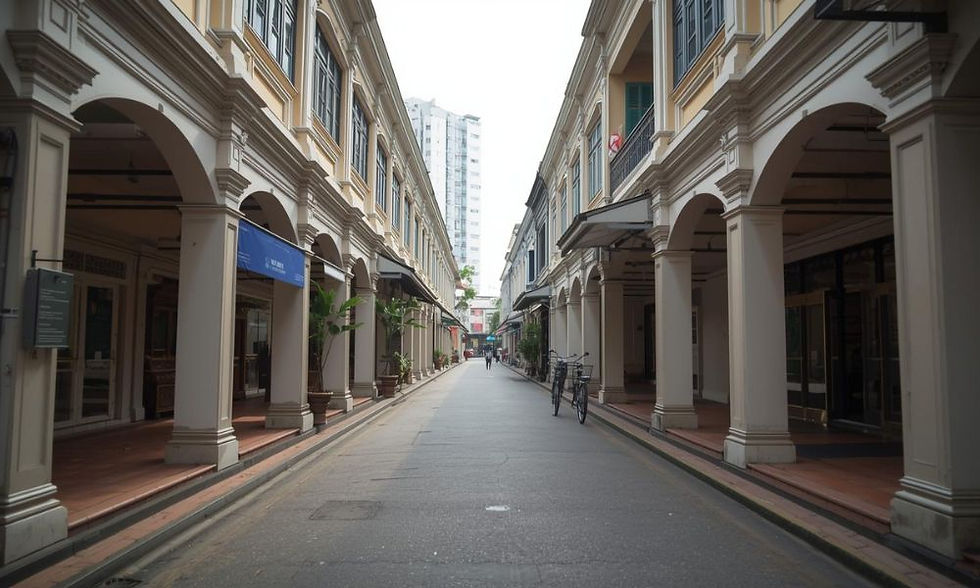
In Singapore, some of the most enduring commercial streets are not defined by scale, but by experience. They are streets people enjoy walking through, lingering in, and returning to. This is where shophouses continue to hold unique value.
As Singapore plans for a more liveable, connected, and people-friendly city, the role of shophouses in walkable neighbourhoods becomes even more important. These buildings were designed for the street.
Their frontage, rhythm, and human scale contribute to the kind of urban environment that modern planning increasingly values. URA’s urban design guidance across multiple districts repeatedly emphasises attractive and pedestrian-friendly streets, active frontages, and activity-generating uses at street level.
Why Walkable Neighbourhoods Matter More Than Ever
URA’s planning direction has increasingly focused on creating districts that are easier and more pleasant to move through on foot.
Across its urban design materials, URA highlights seamless pedestrian connectivity, human-centred streetscapes, and activity-generating uses such as retail and F&B as part of building vibrant, liveable places.
For investors, this is more than a lifestyle talking point. A walkable area tends to support stronger street activity, better visibility for ground-floor tenants, and more consistent engagement throughout the day. In other words, walkability is not just good urban design. It can also support commercial resilience.
How Shophouses Naturally Support Walkable Neighbourhoods
Shophouses are especially well-suited to walkable neighbourhoods because their architecture was never meant to be isolated from the street.
Features such as five-foot ways, narrow frontages, regular door intervals, and active ground floors create visual rhythm and encourage movement at a pedestrian pace.

The five-foot way, in particular, does more than provide shelter. It creates continuity and allows people to move comfortably from one unit to another while staying engaged with shopfronts and street activity. This supports the kind of lively, fine-grain environment that large-format developments often struggle to replicate.
Because shophouses are built at a human scale, they also make streets feel more approachable. Instead of overwhelming the pedestrian, they interact with them directly.
Street Frontage and Active Ground Floors Create Commercial Energy
One of the reasons URA repeatedly pushes for activity-generating uses at lower levels is simple: active frontages create more vibrant streets.
In planning guidance for areas such as Orchard, Downtown Core, and Rochor, URA specifically calls for retail, food and beverage, and other active uses on key pedestrian-facing storeys to create attractive, pedestrian-friendly environments.
This is where shophouses perform particularly well.

Their layouts are often ideal for businesses that depend on visibility, direct access, and spontaneous discovery. Cafés, boutiques, clinics, studios, and lifestyle concepts all benefit from being part of a street where people are already walking, browsing, and dwelling.
For landlords, this means a better alignment between the physical form of the property and the commercial needs of the tenant.
A Subtle ESG Advantage Without Forcing the Narrative
There is also a quieter sustainability story here.
Walkable districts support lower car dependence and reinforce more efficient use of existing urban fabric. URA’s broader planning materials emphasise connectivity, liveability, and people-oriented public realm design as part of building a more inclusive and sustainable city.
Shophouses fit naturally into this vision. They are not just heritage assets, but part of a built form that already supports density, accessibility, and mixed-use neighbourhood life. For investors, that gives them relevance not only historically, but also in the context of future city-making.
Shophouses continue to matter because they do something many modern buildings cannot do as well: they contribute to the street.
The PropNex Shophouse Elites team helps investors assess not just the property, but the wider neighbourhood dynamics that support long-term value. Speak with us to explore opportunities in streets built for long-term resilience.


Comments