

Singapore Shophouse Districts Where Night-Time F&B Demand Drives Rents

By 9pm, some shophouse streets have already gone quiet. Others are just getting started.
Office-led districts see strong weekday lunch traffic before quietening rapidly once workers leave.
F&B-anchored streets like Keong Saik and Duxton continue drawing diners and visitors well past 9pm. That gap in foot-traffic patterns shows up directly in what tenants are willing to pay for rent.

For investors assessing shophouse districts at night, this day-to-night pattern provides useful insight into how many sources of demand actually support the location.
Singapore’s planning approach increasingly recognises the importance of evening activity. URA describes night lighting as an element that helps bring districts to life after dark and support Singapore’s night economy. Its Master Plan 2025 also highlights late-night dining, festivals, recreation, and waterfront activity as part of creating a more active city centre after working hours.
Why Some Singapore Shophouse Districts at Night Stay Active
The strongest evening districts usually have several groups using the area for different reasons.
Office workers may generate breakfast and lunch demand. Residents support supermarkets, dining, gyms, and everyday services. Restaurants attract dinner crowds. Hotels and cultural attractions bring visitors who may remain in the area after daytime activities finish.
Each group extends the commercial life of the street.
Boat Quay demonstrates this layering particularly clearly. URA describes the Singapore River precinct as a mix of residential amenities, commercial activities, and nightlife. Boat Quay itself contains conserved shophouses alongside eating and retail establishments, giving the area reasons to remain active beyond office hours.
A predominantly office-driven street behaves differently. Strong morning and lunchtime traffic can disappear quickly in the evening if few residents, restaurants, attractions, or recreational uses remain nearby. That difference matters when evaluating tenant demand.
F&B, Homes and Evening Uses Create Multiple Demand Layers
F&B plays an important role in extending street activity because restaurants naturally operate across lunch and dinner periods. URA even requires restaurants in designated Activity Generating Use areas to operate through the day until a reasonable end to evening mealtimes.
Nearby housing adds another layer. Residents generate recurring demand outside traditional office hours. They may dine locally, collect services, or simply walk through the neighbourhood. Their presence gives businesses access to customers who remain in the area when the working population leaves. Hotels, cultural attractions, entertainment, and late-opening retail can extend this window further.
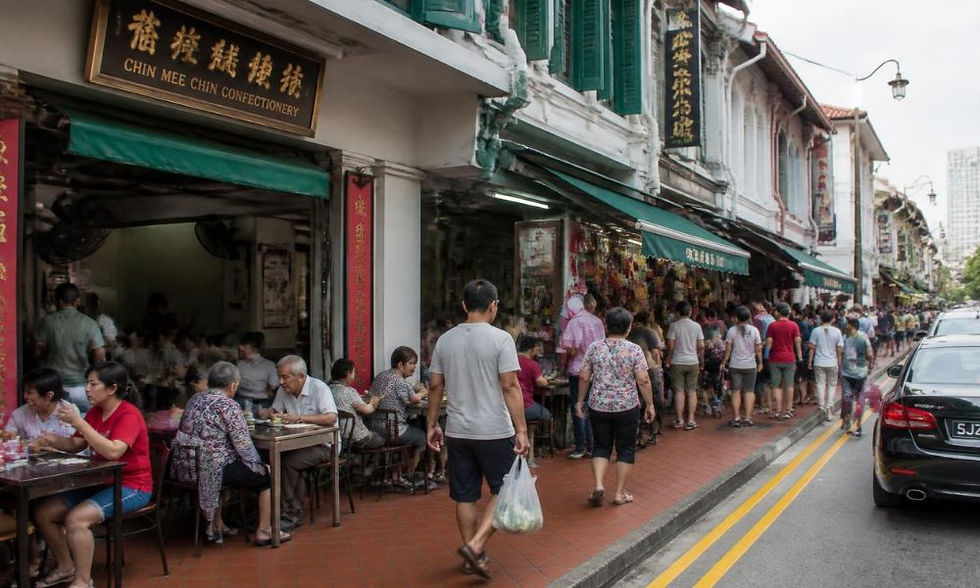
However, investors should avoid assuming that every successful night-time shophouse district needs bars or clubs. URA restricts new bars, nightclubs, karaoke lounges, and live entertainment uses across historic conservation areas and several shophouse districts, including Chinatown, Joo Chiat, Little India, Jalan Besar, and Kampong Glam.
A healthy evening economy can therefore develop around dining, cultural activity, recreation, retail, residents, and visitors rather than nightlife alone. Lighting and streetscape quality also influence how long people remain outdoors.
What Day-to-Night Activity Means for Shophouse Investors
For landlords, a district with several periods of activity can support a broader range of tenants.
A café may depend heavily on mornings. An office benefits from weekday accessibility. A restaurant needs evening demand. A wellness operator may attract customers before work, during lunch, and after office hours.
When these businesses coexist within one district, activity becomes distributed across the day. That distribution can strengthen leasing flexibility. If demand relies heavily on one customer group or one time period, changes to that group can have a larger impact on the street.

Investors should therefore look at who uses the area, when they arrive, and why they stay. A simple observation at different times can reveal information that a property listing cannot:
Is the street active before office hours?
What happens after the lunch crowd disappears?
Do residents appear in the evening?
Which tenants remain busy after 7pm?
Does weekend traffic look different from weekday traffic?
Are people passing through or spending time in the precinct?
These patterns help explain the underlying commercial ecosystem. A 2pm viewing can show the building, layout, frontage, and immediate surroundings. It cannot reveal the full behaviour of the district.
Return in the morning. Visit again during lunchtime. Walk the same street after work and, where relevant, on a weekend.
Pay attention to pedestrian movement, restaurant occupancy, neighbouring businesses, transport connections, lighting, residential activity, and how quickly the street quietens.
Looking at a shophouse opportunity? The PropNex Shophouse Elites team helps investors assess the wider district alongside the property, including tenant demand, footfall patterns, surrounding uses, and day-to-night activity. Speak with our team to understand how a shophouse location performs beyond a single viewing.


Comments