

Singapore Shophouse Districts: Why Some Neighbourhood Shops Thrive and Others Fade

Neighbourhood shops thrive when they serve a clear local catchment, are convenient to reach, remain visible from the street, and sit among complementary businesses. Trend-driven concepts may attract attention quickly, but shops connected to residents’ everyday routines often have stronger foundations for long-term tenancy.

A fashionable tenant can make a property look attractive today. But sustainable rental demand depends on whether the surrounding neighbourhood can support that business after the initial excitement fades.
What Makes Businesses in Neighbourhood Shophouses Sustainable?
The first factor is the local catchment: the residents, workers, students, and visitors who can realistically become regular customers.
A shophouse surrounded by established homes may support clinics, cafés, enrichment centres, salons, convenience services, and family-oriented businesses. A unit near offices may perform better with lunch concepts, fitness studios, professional services, and after-work dining.
Convenience is equally important. Customers are more likely to return when a shop is near an MRT station, bus stop, car park, workplace, or route they already use. HDB’s neighbourhood centres are similarly planned around accessible shops and services that meet residents’ everyday needs, illustrating how convenience and recurring demand work together.
Visibility completes the picture. A tenant may have a strong concept, but it still needs to be noticed. Clear frontage, readable signage, street-level access, and steady pedestrian movement all improve the chances of spontaneous discovery.
Why Some Neighbourhood Shophouse Businesses Become Part of Daily Life
The most resilient neighbourhood shops usually solve recurring problems.
People need meals, groceries, healthcare, grooming, education, repairs, and convenient services regardless of what is currently trending. These businesses become embedded in local routines because customers have practical reasons to return.

URA’s current framework for eligible first-storey shophouse uses reflects this diversity. Depending on zoning and planning conditions, these spaces may accommodate uses such as fitness centres, laundromats, offices, commercial schools, pet services, and senior or community facilities.
A varied tenant mix can strengthen the entire street. A clinic may bring weekday traffic. A café creates morning and lunchtime activity. A fitness studio draws visitors before and after work. Together, these uses generate multiple reasons to visit the area.
This is more sustainable than depending on one destination tenant to generate all the demand.
Resilient trades versus trend-driven tenants
Trend-driven tenants are not automatically weak. A distinctive restaurant, boutique, or lifestyle concept can transform a street and attract customers from across Singapore.
The risk arises when the business relies heavily on novelty, social media attention, or temporary consumer behaviour without a stable local audience. Once the trend fades, the location may not provide enough recurring demand to sustain the rent.
Neighbourhood-serving trades tend to behave differently. Their customer base is usually closer, their services are needed more regularly, and their success is less dependent on becoming a destination.
Investors should therefore examine the tenant’s underlying demand rather than focusing only on how exciting the concept appears.
Why shophouses embedded in daily routines can outperform
Joo Chiat offers a useful example of how heritage, local activity, and varied commercial uses can reinforce one another.
The area contains conserved shophouses and terrace houses along established residential streets. It is also known for food, shopping, community activity, and strong cultural character.
URA’s plans for the Historic East include improving pedestrian spaces and ensuring that new developments remain compatible with nearby shophouses while contributing street-level shops and eateries.
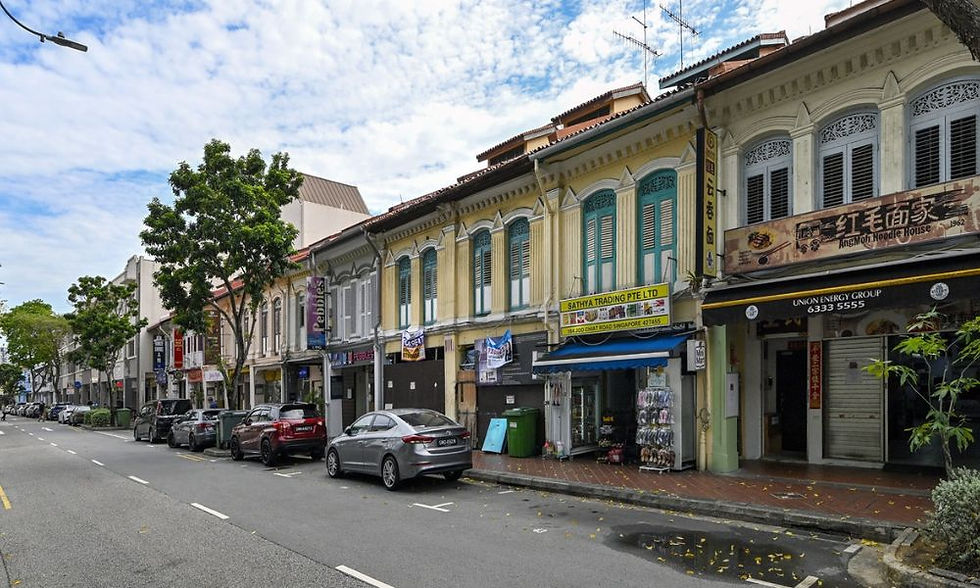
Its appeal is not based on tourism alone. Residents continue to shop and dine there, while visitors are drawn by the district’s distinctive identity. That combination gives businesses access to both recurring neighbourhood demand and wider destination traffic.
The most resilient neighbourhood shops are rarely successful by accident. They sit where catchment, convenience, visibility, and daily demand reinforce one another.
Looking for a shophouse with stronger long-term leasing fundamentals? The PropNex Shophouse Elites team assesses more than the property itself. We examine tenant suitability, local catchment, surrounding uses, and street-level demand to help investors identify opportunities positioned for sustainable occupancy. Speak with our team to explore the right location for your investment strategy.


Comments