

How URA Identity Corridors Could Influence Shophouse Investment Appeal Over Time

When investors evaluate shophouses in Singapore, the conversation often starts with familiar factors such as tenure, rental yield, location, zoning, and tenant demand. But over the long term, another less obvious factor can influence how attractive a shophouse becomes: the identity of its surrounding street or district.
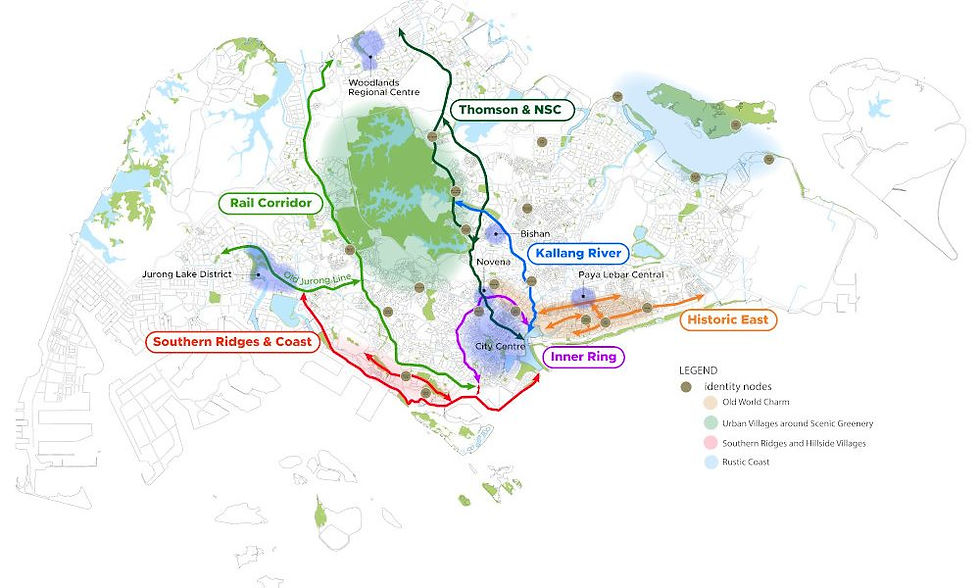
As URA continues to shape Singapore through long-term planning, identity corridors may play a meaningful role in strengthening neighbourhood character, improving connectivity, and supporting sustained street-level activity over time.
That is part of why Singapore’s identity corridors matter. They are not just planning concepts. They are signals of how neighbourhood character and connectivity may be strengthened in the years ahead.
The Urban Redevelopment Authority introduced identity corridors as part of Singapore’s long-term planning efforts to strengthen the heritage and identities of stretches of land marked by familiar landmarks, neighbourhoods, and streets.
In the Draft Master Plan 2025 process, URA engaged the public on three identity corridors: the Historic East, Kallang River, and the Inner Ring. These corridors are intended to support stronger character, more meaningful public spaces, and more continuous walking and cycling networks.
What URA Identity Corridors Mean For Singapore Property Value
At first glance, identity corridors may sound like a branding exercise.
In reality, they are more structural than that. URA frames them as part of a wider planning effort to enhance recreational experiences, improve public spaces, deepen community memory, and strengthen connections between neighbourhoods
That matters for shophouses because these properties tend to perform best in areas where street character is strong and where people enjoy spending time at ground level.
When a district becomes easier to walk through, easier to remember, and more culturally legible, that can support the kind of footfall and local attachment that benefits street-based businesses.
This is especially relevant for heritage streets, where atmosphere is often part of the commercial appeal.
How Neighbourhood Character And Connectivity Can Support Shophouse Demand
URA’s material on identity corridors repeatedly ties neighbourhood identity to improved walk-cycle infrastructure, deeper exploration of city-fringe neighbourhoods, and the creation of more meaningful community spaces.
The Inner Ring guide, for example, highlights how improved walk-cycle links can connect with intra-neighbourhood routes and support exploration of hidden gems.

For shophouse investors, that is important because street-level demand rarely depends on the unit alone. It depends on whether the wider area invites movement, browsing, and return visits. A better-connected corridor can help bring more people through a district.
A stronger neighbourhood identity can also make streets more attractive to cafés, boutiques, wellness concepts, and other tenants that rely on experience as much as convenience. Over time, this can reinforce both tenant demand and the overall appeal of the precinct.
Why Shophouses Near URA Identity Corridors May Gain Long-Term Appeal
Shophouses are especially well placed to benefit from place-making momentum because they already contribute to the street in visible ways.
When an area is being strengthened through better pedestrian links, public spaces, and a clearer district identity, shophouses within or near that corridor may gain from the wider uplift in perception and activity.
A district with stronger identity and better connectivity may become more attractive not only to visitors and residents, but also to businesses looking for a neighbourhood with staying power.
How Identity Corridors Fit Into Singapore’s Long-Term Place-Making Strategy
One reason this matters is that URA plans in long horizons. Identity corridors are not quick campaigns. They sit within broader planning frameworks tied to community engagement, urban design, and phased improvements over time.
For investors, that long-term place-making momentum can be valuable. It shifts the conversation from what a street is today to what it is gradually becoming. And for shophouses, which often reward patience more than speed, that distinction matters.

Identity corridors reflect a planning intention to strengthen neighbourhood character, improve connectivity, and create more meaningful public environments.
Shophouses in or near these corridors may benefit not from hype, but from the slower, steadier effects of better place-making. In a market where long-term context often matters as much as the asset itself, that is worth watching.
Understanding where planning, identity, and street-level demand intersect can make a real difference over time. The PropNex Shophouse Elites team helps investors assess not just the property, but the wider neighbourhood momentum shaping long-term appeal. Speak with us to explore opportunities positioned for the years ahead.


Comments